RESET partners with the Safer Air Project and Public Health Action Network on Indoor Air Accessibility
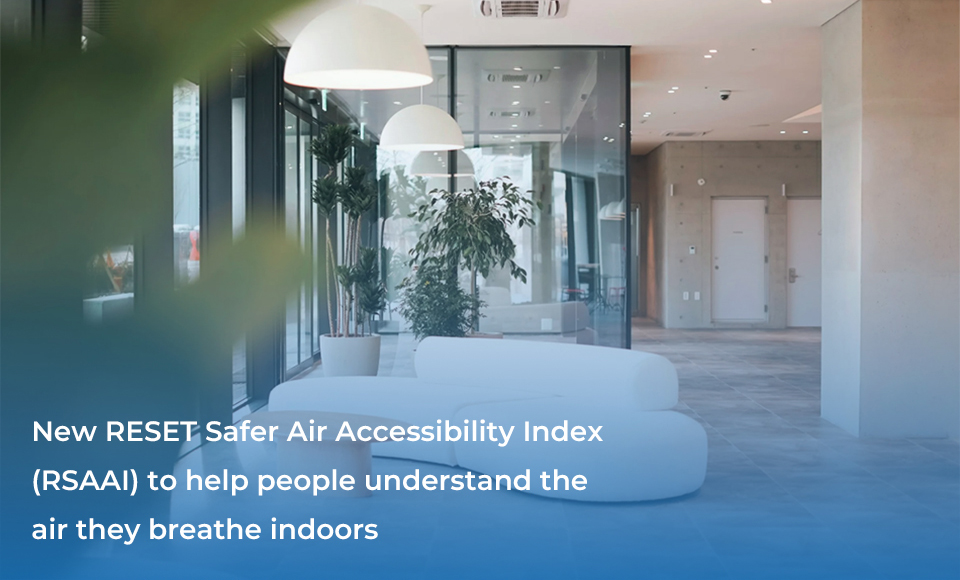
Read the official announcement: RESET, the Safer Air Project, and the Public Health Action Network launch the RESET Safer Air Accessibility Index (RSAAI).
RESET has partnered with the Safer Air Project (SAP) and the Public Health Action Network (PHAN) to develop the RESET Safer Air Accessibility Index (RSAAI), a new open framework that makes indoor air quality more visible, understandable, and accessible.
The partnership brings together complementary expertise from each organization. The Safer Air Project contributes leadership in indoor air accessibility and advocacy, while PHAN brings expertise in public health and evidence-based communication. RESET contributes its experience in building performance measurement, continuous monitoring, and transparent methodologies, helping translate the data into information that people can understand and use.
Buildings are becoming increasingly capable of delivering healthier indoor environments, yet occupants still have few ways to understand how the air in a space is actually performing.
The RSAAI explores new ways to communicate indoor air performance through a clear and accessible framework. Rather than relying on any single measurement, it considers multiple layers of protection, including ventilation, filtration, portable air cleaners, and air disinfection technologies, to provide a more complete picture of indoor air quality.
Beyond helping occupants understand indoor air quality, the framework gives building owners and facilities teams a better way to demonstrate the work they do to operate healthy indoor environments. Many of these efforts happen behind the scenes, and the RSAAI helps make that ongoing performance more visible to the people using the building.
For RESET, the project builds on more than a decade of work developing building performance standards based on continuous measurement and transparent environmental data. It also builds on the earlier RESET Viral Index research, which explored new ways to communicate airborne infection risk through performance data. The RSAAI extends that work by making complex building performance data easier for occupants and the broader public to understand.
As development of the RSAAI continues, RESET looks forward to working alongside the Safer Air Project and the Public Health Action Network to help make healthy indoor environments easier to understand and communicate. The collaboration reflects RESET’s broader commitment to supporting open, science-based initiatives developed with non-profit organizations, public health leaders, and industry partners.
About the Safer Air Project
The Safer Air Project is an Australian charity, advocating for indoor air quality as a critical accessibility and inclusion issue for people living with chronic health conditions. Our vision is to create a world where everyone can breathe safely indoors, ensuring healthy and inclusive environments for all.
About RESET Standard
RESET Standard is a non-profit organization that develops and operates an international building performance standards and certification program, advancing healthy and sustainable buildings through continuous measurement and transparent environmental data. By combining open methodologies with digital assessment tools, RESET helps building owners, operators, and technology providers measure, benchmark, and improve environmental performance across indoor air quality and sustainability.
About the Public Health Action Network
Public Health Action Network (PHAN) is a nonprofit 501(c)(3) dedicated to uniting and amplifying diverse global public health initiatives. Our mission is to safeguard public health by improving air quality, promoting evidence-based COVID-19 and airborne pathogen prevention strategies, and empowering communities through education and advocacy. We strive to reduce the impact of airborne pollutants and infectious diseases by advocating for the widespread adoption of filtration systems, supporting mask usage, and disseminating scientifically backed information about the long-term harm caused by COVID-19, other pathogens, and the effectiveness of clean air.
